October 18, 2009
Pet Insurance
Veterinarian bills can be quite expensive, especially for emergency situations. Some vets offer lines of credit or payment plans but those vets are dwindling in this economy. One alternative to credit is insurance.
The ASPCA offers pet insurance with four levels of courage. They have a low, annual deductible of one hundred dollars. You only have to pay one hundred dollars once per year. Depending on the level, you will get more coverage. Some of their levels includes coverage for routine care such as dental cleanings and immunizations.
You do not have to switch vets to use their insurance. You can go to any license veterinarian including out of state vets. It is easy to get a quote online or over the phone and their website is filled with information about their insurance and their levels of courage.
Visit their website: http://www.aspcapetinsurance.com/?utm_id=2100
October 15, 2009
Bloat
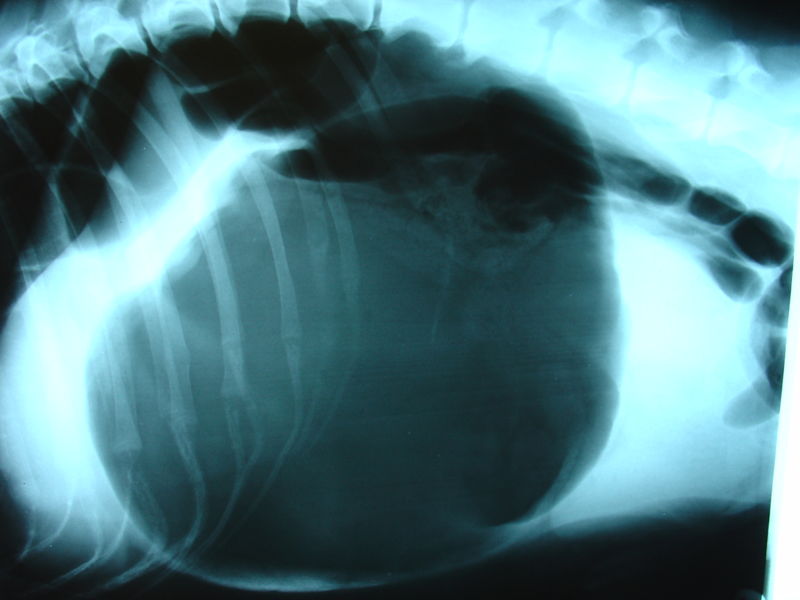
Bloat is a twisting of the stomach caused by a build up of gas inside the stomach cavity and is common in dogs with deep chests such as Great Danes and Weimaraners. It is an extremely serious condition and a dog suspected of having bloat should go immediately to a veterinarian. A dog with bloat can die within minutes, but generally will only live around two hours if he does not receive immediate treatment.
The signs of bloat are visible discomfort when it appears to be nothing wrong and a difficulty laying or sitting down. A descended belly may also be noticeable and the dog will hypersalivate. Another obvious symptom is a dog that appears nauseous. The dog may vomit frequently with little coming up.
Preventative measures for dogs susceptible to bloat are to feel small bite kibble, use raised food bowls (some say this causes bloat), and to disallow exercise for several hours after eating. Dogs should not have their water restricted before or after meals and should eat two or more meals per day. A fast first aid treatment for bloat is to give Pepsid but this should not replace immediately taking the dog to the veterinarian.
A veterinarian will be able to determine bloat with a physical exam as well as an X-Ray. Some treatments use only intravenous fluids but surgery is often suggested. Bloat has a high recurrence rate in non-surgical treatments, almost 80%. During surgery, the dogs stomach may be permanently attached to the wall of the stomach cavity to prevent it from twisting in the future. Surgery will also reveal any damage caused by bloat such as necrosis of the stomach tissue.
Breeds most susceptible to bloat are Great Danes, Weimaraners. St. Bernards, Gordon Setters, and Irish Setters.
October 14, 2009
Is Your Dog A Good Citizen?
After spending many hours training your dog to follow your commands and be a positive member of your household, a good way to show off all of the hard work is to have your dog tested as a Canine Good Citizen by the American Kennel Club.
The Good citizen program is open to all ages and breeds, including mixed breeds. The primary goal of the Canine Good Citizen test is to promote responsible dog ownership. It is up to the owner to train a dog not to be a nuisance to society. There are training classes focused only on passing the Good Citizen Test. Dogs are tested on the following 10 points:
- Accepting a Stranger
- Sitting for Petting
- Appearance and Grooming
- Walking on a Leash
- Walking in a Crowd
- Sit/Stay
- Come
- Reacting to Another Dog
- Reacting to Distractions
- Separation from Owner
For more information go to: http://www.akc.org/events/cgc
October 13, 2009
How Much to Drink?
One dog issue talked about rarely is the amount of water a dog should consume in one day. Every bag of food has an amount based on a dog’s weight and a veterinarian will even give his opinion on what a dog should eat, but have you ever been told how much water to give your dog?
It may seem like a no brainer. You fill up your dog’s bowl and let him drink whenever he is thirsty right? It may be a good idea to measure your dog’s water. If your dog is ever sick, you will know exactly what to tell your veterinarian your dog has consumed. If a dog starts drinking less than usual, it may be a sign of sickness. Conversely, if your dog seems extremely thirsty, it can be a sign of a serious issue.
Most dogs will need around 2 ounces per pound of body weight. For example, a 20-pound dog will need 40 ounces a day or around 5 cups per day. You may also need to increase the water if the dog is particularly active or if he or she spends a lot of time outdoors on a hot day.
Wet dog food has its own moisture content so the amount of water a dog has to drink may decrease slightly depending on what is in the food. Of course, always consult your veterinarian if you are unsure about your dog’s health. They are the experts and want you to have a happy and healthy dog as much as you do.
October 12, 2009
Five Commands Every Puppy Must Learn
Training a puppy is difficult but can be successful with patience and diligence. There are several commands that every puppy should learn early on to make him a pleasure to have in your home. Training times will also become a delightful bonding experience between you and your new puppy.
- Sit: It is the most basic command, the easiest to teach, and often the most useful. A sitting dog is one that will not get in the way if you are out shopping, or pull the leash if you need to tie your shoe.
- Off: Guests may find it a nuisance to have your puppy jumping up and pawing at their legs when they visit. This is where the off command comes into play. A simple, “off†will prompt your dog to stop groping at the legs. You can also combine it with, “sit.â€
- Drop It: Have you had a game of tug-of-war with your pup trying to pry a house show from his jaws? A simple command like, “drop it†or, “release†will prompt the dog to open his mouth and release the house shoe.
- Come: Going to a dog park is a wonderful experience, but, “come†is an imperative command so that you can get your dog to return. It is a quick command for dogs to pick up.
- Stay: It can be one of most difficult of the basic commands to teach, but it is also a necessity. One of the reasons it is hard to teach a dog to stay is because of the difficulty in making the puppy understand what you are asking him to do. It requires a lot of patience and practice but it is not impossible to learn even if at times it may seem that way.
Enjoy the countless hours ahead training your pup. Once he has the basics, it is a joy to move onto more advanced commands and you will notice a growing trust between you and your companion. Check back for more in-depth dog training articles.