显示标签为“Blog”的博文。显示所有博文

2013年9月28日星期六

Paws & Jaws Blog


July 23, 2010


Microchipping


Posted in Pets at 5:02 am by pawsandjaws


Most people know what microchipping this day and age. It is not brand new technology and veterinarians recommend them frequently. Most dog shelters require microchipping. But I recently learned HomeAgain microchipping service has a serviceyou can opt in so you are notified of missing pets in your area. It seemed a brilliant idea when I discovered it. I am emailed a description of the pet, where it was last seen, and sometimes a picture. I am happy I learned of this service. It may feel like an inconvenience to look for someone’s pet but when I think about someone’s joy over a recovered pet; it is not the least bit inconvenient. I would want someone to do the same for me. PPZVFFGGAJCG


July 19, 2010


Beach Safety Tips


Posted in Pets at 10:00 pm by pawsandjaws


It is mid July and at the height of summer vacation season. The beach is a lovely place to go, especially with the recent heat wave in the east. There are some safety tips to keep in mind if you would like to bring your dog along with you.


  • Drinking water-hydration is as important to dogs as it is to humans. Bring plenty of fresh water and disallow your pet from drinking salt water.

  • Sunscreen- Yes! Dogs can burned by the sun. It is easy to overlook sunscreen for a dog because they have all that fur, but some dogs are more prone, such as dogs with light skin and short fur. Go to your local pet store and pick up some sunscreen.

  • Identification-Make sure your dogs have proper tags with updated information in case they run off in all of the excitement.

  • Immunization-Tour dog’s immunizations should be up to date as a protection to and from other dogs he or she may come into contact with at the beach.

  • Life jacket- Dogs who are new to the water may not know what to expect. A life jacket is not always necessary but can be a lifesaver.

  • Umbrella-A large beach umbrella will provide shade for you and your pet. It reduces the chance for sunburn and heat exhaustion.

  • Emergency numbers-Keep your veterinarian’s emergency number handy just in case there is a problem. If you are traveling out of town, find a nearby veterinarian offering emergency services.


The beach is an excellent summer destination or you and your pet. Most hazards can be avoided with a little preparation and observation. Avoid the heat and UV rays and enjoy the waves!


June 29, 2010


Dog Food: Eggs


Posted in Pets tagged , at 10:00 pm by pawsandjaws


It can be confusing which human foods are safe for dogs. It is worth it to research what is safe and make your dog something special. One of my favourite foods to serve my dogs are eggs. Eggs are completely safe but need to be well cooked because they carry salmonella. Salmonella isn’t as much of a threat to dogs as it is to humans but why risk it? Dogs don’t need the seasoning that we do. A plain scrambled egg  will suffice or you can cook it any way you prefer. Dogs will be able to smell the fat and protein in the egg and that is all the seasoning they need.


June 28, 2010


Doggy Trip


Posted in Dog Fun, Dog Grooming, Dogs, Pets tagged , , , , , , , at 1:15 pm by pawsandjaws


Beaches make a wonderful day trip destination for you and your pet, but it does take some planning. Beaches have a lot of rules pertaining to dogs. Some beaches are fully accessible, off leash, all year and others are seasonal. You can search beaches to find their rules and you want to closely follow them. For example, Wrightsville Beach, NC only allows leashed dogs before April 1 and after September 30. Carolina Beach, NC allows leashed dogs November 1 to February 28. They also require you to have a container for dog waste, which you must produce if asked by authorities.It is important to be respectful of the beach by picking up dog waste and any litter related to you and your dog. Beaches should remain as pristine as possible.


If you take your dog to an off leash beach, be sure your dog follows your commands fully. There are many distractions, especially if the beach is a brand new environment. Many dogs like to chase after birds, crabs, and possibly other dogs. If you have any doubts in your dog’s obedience, keep him leashed.


For extended trips be sure to bring cool, clean, fresh drinking water and food if necessary. Collapsible travel bowls are a wonderful accessory. A towel may also come in handy if your dog enjoys getting in the water. Your dog may not enjoy the beach at all. It is trial and error. Either way you can have a good time seeing how he adjusts to the experience. Don’t forget your camera!


June 27, 2010


Leashes Leashes Leashes


Posted in Dogs, Pets tagged , , , , , , at 10:00 pm by pawsandjaws


You may agree, it goes without saying, dogs should be kept on a leash at all times. Not everyone feels this way. It can be misleading. Some dogs never leave the yard, always stay by your side, and follow every command. You must keep in mind that a dog is still an animal with a mind of its own. They can be distracted by smells, sounds, and sights. So, why risk them getting away from you? A dog may be frightened by a noise, dash into the street, and get hit by a car. You have more control over a leashed dog.


It is easy to take for granted a person’s fear of dogs. We love them so much, doesn’t everybody? Simply, no.  Some people run away from the cutest fluffiest puppies. For those people, it is comforting to see a dog on a leash. I don’t want to inflict terror on anyone. Set and example and show that even though your dog is well behaved, it is ok to have him or her on a leash.


For a full selection of collars and leashes check www.paws-jaws.com


Common Courtesy


Posted in Dogs, Pets at 3:20 pm by pawsandjaws


Most counties have legislation requiring pet owners to pick up dog feces while on other property. This should be common courtesy and is apart of being a responsible pet owner. Carrying around bags can be annoying, but after a while it becomes habitual. No homeowner wants to go into their yard and find a special surprise left by another dog. It is more of a nuisance in public areas where people gather. People should not have to watch their step wile having a picnic. Often, if you time your walks right, your dog wont have to potty while on a walk. Even if certain areas are designated as dog potties, common courtesy dictates you still pick it up. More and more places are installing trashcans specifically for this. They are springing up at dog parks and walking trails everywhere. Be respectful and responsible.


April 13, 2010


Buying a Dog Crate


Posted in Dog Facts, Dogs, Pets tagged , , , at 8:51 pm by pawsandjaws


Every dog needs a place to nap during the day and a place to sleep at night. A dog crate is a great place for that. Your dog can have his own sanctuary.  Here are a few pointers for finding the proper sanctuary.


1.  Size- the crate should be large enough for the dog to stand up, completely turn around, and stretch out. It should not be too large during the puppy stages when potty training. If it is too large, the dog will be able to find a section he can comfortably use the bathroom. Some crates have adjustable panels inside to make the crate smaller and then larger as the puppy grows into a full sized dog.


2.  Wire vs Plastic- Wire crates allow more ventilation for hairy dogs who may get hot easy. The drawback is that it is easier for the dog to see out of and be distracted. Plastic crates can retain more heat and make it more cozy for dogs with a tendency to get cold.


3.  Accessories- all crates need a good crate pad or blanket. Some pads come with removable covers that can be washed in case of accidents but any blanket should suffice. You can also buy a fashionable cover to help him sleep at night. It can reduce whining and barking. For wire crates you can also buy water dispensers where the dog can have a drink if needed but this may be best only during nap times so the dog wont have to go out in the middle of the night.


You may decide to buy several crates as your dog grows as well as crates you use strictly for travel. There are many options available at your local pet store.


February 15, 2010


Dew Claws


Posted in Dog Grooming, Pets, Uncategorized tagged , , at 11:26 pm by pawsandjaws


Dew claws are the claws that are higher up on a dog’s feet than the other claws. They are similar to a a human’s thumb. Most dogs have the dew claw only on the front paws but some breeds, such as the Saint Bernard, have dew claws on their rear paws. They serve little function and must be clipped like a dog’s other claws. It is important to keep them short because they can get caught on objects. Some choose to have their pet’s dew claws removed.


The best time to have dew claws removed is a week or so after a puppy is born. At this stage, the dew claw is not firmly attached. As the dog ages, the dew claw becomes more of a toe than just a claw and it is harder to remove. Some chose to have the dew claw removed at the same time as spay/neuter surgery. This time is optimal because the dog will only be exposed to the anesthesia once and they can “get it over with.” There is always a certain risk in anesthesia. There will also be only one office charge for combining the two procedures.


Dew claw removal is not a necessary procedure. Some dogs are more prone to catching an pulling the claw than others. You can make the choice to have the procedure at any time during the dog’s life but you want to do it sooner rather than later. If you keep your dog’s dew claw, always keep it short and maintain the length. It can be harder to push back the quick on the dew claw than it is on the other claws.


October 18, 2009


Pet Insurance


Posted in Pets at 2:00 pm by pawsandjaws


Veterinarian bills can be quite expensive, especially for emergency situations. Some vets offer lines of credit or payment plans but those vets are dwindling in this economy. One alternative to credit is insurance.


The ASPCA offers pet insurance with four levels of courage. They have a low, annual deductible of one hundred dollars. You only have to pay one hundred dollars once per year. Depending on the level, you will get more coverage. Some of their levels includes coverage for routine care such as dental cleanings and immunizations.


You do not have to switch vets to use their insurance. You can go to any license veterinarian including out of state vets. It is easy to get a quote online or over the phone and their website is filled with information about their insurance and their levels of courage.


Visit their website: http://www.aspcapetinsurance.com/?utm_id=2100


October 15, 2009


Bloat


Posted in Pets at 2:00 pm by pawsandjaws


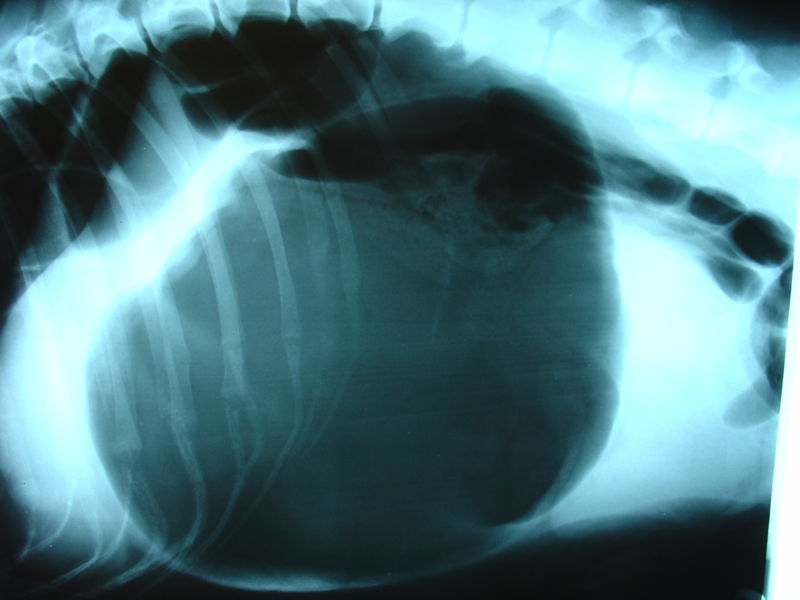
Bloat is a twisting of the stomach caused by a build up of gas inside the stomach cavity and is common in dogs with deep chests such as Great Danes and Weimaraners. It is an extremely serious condition and a dog suspected of having bloat should go immediately to a veterinarian. A dog with bloat can die within minutes, but generally will only live around two hours if he does not receive immediate treatment.


The signs of bloat are visible discomfort when it appears to be nothing wrong and a difficulty laying or sitting down. A descended belly may also be noticeable and the dog will hypersalivate. Another obvious symptom is a dog that appears nauseous. The dog may vomit frequently with little coming up.


Preventative measures for dogs susceptible to bloat are to feel small bite kibble, use raised food bowls (some say this causes bloat), and to disallow exercise for several hours after eating. Dogs should not have their water restricted before or after meals and should eat two or more meals per day. A fast first aid treatment for bloat is to give Pepsid but this should not replace immediately taking the dog to the veterinarian.


A veterinarian will be able to determine bloat with a physical exam as well as an X-Ray. Some treatments use only intravenous fluids but surgery is often suggested. Bloat has a high recurrence rate in non-surgical treatments, almost 80%. During surgery, the dogs stomach may be permanently attached to the wall of the stomach cavity to prevent it from twisting in the future. Surgery will also reveal any damage caused by bloat such as necrosis of the stomach tissue.


Breeds most susceptible to bloat are Great Danes, Weimaraners. St. Bernards, Gordon Setters, and Irish Setters.



Next page

2013年9月27日星期五

bloat - The Dog Blog


Bloat: What It Is and What The Signs Are


Recently, I had a scare with my dog and thought she might have a case of bloat. The first dog I had as girl growing up, a GSD, passed away due to bloat so I know how sudden and seemingly out of nowhere it can appear. It happened when we left for a weekend road trip. We took off early in the morning and because she is prone to car sickness I opted not to feed her breakfast until after we arrived…


read more

2013年9月26日星期四

Health Alerts | The Weim Blog


  • Trimming dog toenails (8/16/2012) – I’ll never forget the day Jane Forsyth, long time breeder/owner/exhibitor, chewed me out because my show dogs’ toenails were too long. She made a point of giving me reserve just to show that little things can make the difference. My dogs aren’t any better about allowing me to do their nails than they were 15 … Continue reading »


  • The 4 Stages of the Dog Heat Cycle (Signs Your Dog Is In Heat) (9/25/2012) – What are the Signs of a Dog in Heat? One of the problems that many dog owners face is preventing unwanted pregnancy. If you own a male (also called a Sire), you may never know where your dog has sewn his “wild oats”. If you have a female (also called a Dam or a Bitch), … Continue reading »


  • Long-term health risks and benefits associated with spay/neuter in dogs (9/25/2012) – By Laura J. Sanborn April 1, 2007 INTRODUCTION Dog owners in America are frequently advised to spay/neuter their dogs for health reasons. A number of health benefits are cited, yet evidence is usually not cited to support the alleged health benefits. When discussing the health impacts of spay/neuter, health risks are often not mentioned. At … Continue reading »


  • Quick reference guide for GVD – Bloat (11/26/2012) –


  • Adventures in Canine Artificial Insemination : Inaugural Edition (1/18/2013) – Modern veterinary practices make using stud dogs, in other parts of the country, much more accessible than in the past. In the old days, if you lived in Colorado and wanted to to breed your female to a stud in Florida, you either risked shipping her or planned 10 days off from your normal life … Continue reading »


  • True Cause of Bloat Goes Under The Microscope (3/20/2013) – By Susan Chaney It won’t be this year, and most likely not next, but sometime in the next few years, we may actually find out – once and for all – what causes gastric dilatation-volvulus, more commonly known as bloat, and what triggers its occurrence. Read the entire article here:  http://www.bestinshowdaily.com/blog/2013/03/true-cause-of-bloat-goes-under-the-microscope/

gastric dilatation-volvulus | The Mom and Paw Shop Blog


The Myths of Elevated Dog Dishes and Bloat


Bloat in dogs, otherwise known as gastric dilatation-volvulus (GDV) is a very serious health risk and potentially life-threatening condition where the stomach becomes stretched by excessive gas content.  As the stomach swells, twisting can occur between the esophagus and upper intestine, thereby preventing the animal from relieving the condition by belching or vomiting.  The bloated stomach obstructs veins in the abdomen, leading to low blood pressure, shock, and damage to internal organs. The combined effect can quickly kill a dog.


Photo of an x-ray showing gastric dilatation and volvulus in a German Shepherd Dog. The large dark area is the gas trapped in the stomach.


Large breed dogs, especially those that are deep chested, are more susceptible to bloat. According to Wikipedia.org, the five breeds at greatest risk are Great Danes, Weimaraners, St. Bernards, Gordon Setters, and Irish Setters.  In fact, the lifetime risk for a Great Dane to develop bloat has been estimated to be close to 37 percent. Standard Poodles are also at risk for this health problem, as are Doberman Pinschers and Rottweilers. Basset Hounds have the greatest risk for dogs less than 23 kg/50 lbs.


Some of the more common causes of bloat are rapid eating, eating dry foods that contain fat among the first four ingredients, foods such as kibble that expand in the stomach, drinking too much water before and after eating, drinking too much water too quickly, excessive exercise immediately after eating/drinking, stress and heredity.


Prevention of bloat can be difficult, especially for the dog who has had a relative experience bloat, and avoiding the causes listed above can certainly help.  However, there is a misconception out there that elevated dog dishes will help prevent bloat.  The thought being an elevated feeder will align the head allowing for a balanced eating position and better digestion.  Actually, studies are now showing that the opposite may be true…that elevated feeders may actually be a cause of bloat.


Typical elevated dog dish


An elevated feeder can cause a dog to inhale more air and allow the dog to eat its food at a faster than normal rate.  Both of which are causes of bloat.


The Glickman et al study, done on large and giant breed dogs, found that use of a raised feeder actually increases the risk of bloat by 110%. Dr. Glickman’s data showed that “approximately 20% and 50% of cases of GDV among the large and giant breed dogs, respectively, were attributed to having a raised food bowl.” (J Am Vet Med Assoc 2000;217:1492-1499).


While there are many benefits to using an elevated dog dish to feed your dog, new studies are showing that the prevention of bloat may not be one of them and in fact, they could actually lead to bloat.  Careful research should be done before an owner decides to purchase an elevated feeder for a dog that may be susceptible to bloat. 


References: 


Wikipedia: http://en.wikipedia.org/wiki/Bloat 


Peteducation.com: Bloat (Gastric Dilatation and Volvulus) in Dogs


Vet Info:  How an Elevated Dog Feeder Could Lead to Bloat


Globalspan.net: Bloat in Dogs


Published in:

on October 12, 2010 at 9:00 pm  Comments (3)  
Tags: , , , ,


2013年9月25日星期三

GDV Bloat Dogs | 2 Brown Dawgs Blog

Time for Follow-up Friday.  The blog hop that:


Let’s you wrap up your week and leads you right into the weekend.


Thank you to Jodi from Heart Like A Dog and co-host Kari from Hound Girl for hosting the hop!


This is a bit of a different Follow-up.


Yesterday marked the two-year anniversary of the day that we almost lost Thunder to GDV (more commonly referred to as bloat with torsion).  We were very lucky because we recognized the symptoms and took him to an ER vet who had a lot of experience treating this condition.


From 6-13-11 Thunder Training Before He Bloated

From 6-13-11 Thunder Training Before He Bloated


That Spring we were training toward running Thunder in Seasoned and Senior hunt tests.  We had been out training that evening and all seemed well until later that night when we realized something was very wrong.  We rushed Thunder to the ER vet who confirmed our fears of bloat with torsion.  Immediately we had to decide whether to do surgery or not.  The alternative to surgery was euthanasia.  We had moments to decide because time is of the essence when you are treating this condition.  The problem with the surgery was that there were no guarantees it was extremely expensive.  After talking to the vet and her assurance that he was a good candidate for surgery, we agreed.


The surgery went well.  We thought the vet was going to have to remove his spleen, but that turned out not to be necessary.  His vitals were all really good so immediately after surgery he had a positive prognosis, provided there were no complications.  Again, there were no guarantees.  Thunder had to stay in the hospital for a few days.  He did so well that the staff there called him “Thunder the Wonder Dog”.  He also became a favorite because despite being a big intact Chessie, he was never surly or nasty.


Thunder 6-18-11 After He Came Home From The Hospital

Thunder 6-18-11 After He Came Home From The Hospital


Once he was home he was pretty out of it.  It was a couple of weeks before I saw the light return to his eyes and then there was no stopping him.  The vet ordered limited activity for 4 weeks and after that he could run a bit, but as far as hard training, that was a no-no for 6 weeks.  Once he felt better, it was hard to make him sit out, but we followed to the vet’s orders as she wrote them.


From Our Training This Past Sunday--Back In 2011 Slamming Into The Water Would Not Be Good For A Dog Healing From Abdominal Surgery

From Our Training This Past Sunday–Back In 2011 Slamming Into The Water Would Not Be Good For A Dog Healing From Abdominal Surgery


After his training layoff was over, he bounced right back and ran his first Seasoned test 63 days after surgery.  He didn’t pass that test, but he passed the test the next day and went on to earn both his Seasoned and Senior titles that summer, going 3 for 4 in Seasoned and 4 for 5 in Senior.


2011 Ribbons All Earned After His Surgery That June

2011 Ribbons All Earned After His Surgery That June


Despite what you might read, they still do not know what causes this condition.  There are suspicions, so we take precautions such as limiting water consumption before, during and after exercise and not feeding 2 hours before and 1 hour after exercise.  We also use a slow feeder bowl for Thunder and he gets a Gas-x with each meal, (all of our dogs do).  (Always consult you vet before adding medications to your dog’s diet.)


There is a preventative surgery they can do to tack the stomach to prevent it from twisting which we will seriously consider for Freighter although his body style is a bit different from Thunder’s.  Thunder is very narrow and deep-chested.  Freighter is not as narrow or deep, but he is not yet full-grown.  We will wait until he is a bit older to do any surgery because if you tack too young, it may not last the dog’s entire lifetime.


Photo of an x-ray showing gastric dilatation a...

Photo of an x-ray showing gastric dilatation and volvulus in a large mixed-breed dog. The large dark area is the gas trapped in the stomach. The pylorus and duodenum are in an abnormal position cranial to the stomach and are separated by a fold in the stomach, creating a “double bubble” appearance. (Photo credit: Wikipedia)


The most important thing that I hope you take away from this post is to familiarize yourself with the symptoms and if you suspect your dog may be bloating, act immediately and take your dog to the ER vet or vet hospital.  Do not wait because waiting may make the difference between your dog living or dying.


Thunder did not have all the typical symptoms.  He did not appear to bloat.  His abdomen did not have the hollow drum sound.  He was not salivating excessively.  The vet said that he did not have the foamy air bubbles in his stomach that usually happen with bloat.  But he was very restless and was standing roach backed and trying to vomit.  All dogs do not present the same way according to the ER vet.  I am posting a chart which describes symptoms.  (I am not sure who originally made this chart to give credit.)


Bloat Chart (Click To View Larger)

Bloat Chart (Click To View Larger)


We are so thankful that Thunder had a gifted surgeon and staff to take care of him.  Incredibly, they told us that they do 2-3 surgeries a week for this condition.  Two years later Thunder shows no ill effects from his brush with death.  He loves to train and lives to go hunting.  Of course there is a possibility that he could bloat again so we watch for signs and continue to take precautions, but we have not tried to slow him down nor has he really slowed down despite turning 7 last March.


Thunder Training Last Night

Thunder Training Last Night


Thanks for reading my long-winded post.  There were some great questions this past week and I hope to answer them next week, so stay tuned.  I will also be having a really cool give-away in the next week or two so check back for that.


Thanks again to Jodi from Heart Like A Dog and co-host Kari from Hound Girl for hosting the hop.


The weather is supposed to be nice tomorrow and we plan to get some training in.  Have a nice weekend!


Hosted By Heart Like A Dog

Hosted By Heart Like A Dog


Powered by Linky Tools


Click here to enter your link and view this Linky Tools list…


2013年9月24日星期二

Find Retrievers.com News & Articles » Blog Archive » Dr. Becker discusses Canine Bloat

We Are The Cure Blog

‘Bloating’ is a condition most of us are unaware of, but can prove fatal for our paw pals if they are not treated properly. This aliment is characterized by a ‘distended’ or ‘dilated’ stomach. Also called ‘gastric torsion’ or ‘volvulus’ in dogs, ‘bloating’ is caused by accumulation of gas and heavy food materials in the stomach. Although it can affect any dog, larger breeds like the Great Dane and Bloodhound are more susceptible.


The onset of the disease is followed by a large meal. But how would you know your dog has a bloated stomach, because sometimes the distension is not distinctly noticeable and the problem compounds in the event of limited information. So, what are the common symptoms you should look for in your buddy?


  1. Breathlessness

  2. Salivation

  3. Irritation

  4. Failure in vomiting attempts

  5. Drooling

  6. General discomfiture

  7. Weak pulse

  8. Depression


What actually happens is that the distended stomach restricts the flow of blood and oxygen to the heart, thereby causing decrease in blood pressure. Due to the poor supply of blood, deprived tissues begin to die releasing toxins into the blood stream. This causes instant death.


However, this disease is very easy to detect. When you take your pet to the doctor, his immediate course of action is to remove the accumulated gas from the stomach. The doctor then proceeds for shock treatment. The vet performs a gastropexy in which the stomach is sutured to the abdominal wall. This prevents the recurrence of the disease.


In order to help your vet tide over this crisis, good post operative care is imperative. Otherwise, it can give rise to life endangering risks like electrolyte imbalance, cardiac arrhythmias (irregular heart beats) and septicemia (infection).


How can you prevent bloating?


Even if you cannot eliminate the chances completely, you can of course prevent it by following certain simple steps like


  1. Not overfeeding your doggy

  2. Not exercising him before or after meals

  3. Giving him clean fresh water to drink


Sound health breeds happiness. So, keep your buddy in the pink of health so that happiness and well being co-exist in your household all the time.

2013年9月22日星期日

October | 2009 | Paws & Jaws Blog


October 18, 2009


Pet Insurance


Posted in Pets at 2:00 pm by pawsandjaws


Veterinarian bills can be quite expensive, especially for emergency situations. Some vets offer lines of credit or payment plans but those vets are dwindling in this economy. One alternative to credit is insurance.


The ASPCA offers pet insurance with four levels of courage. They have a low, annual deductible of one hundred dollars. You only have to pay one hundred dollars once per year. Depending on the level, you will get more coverage. Some of their levels includes coverage for routine care such as dental cleanings and immunizations.


You do not have to switch vets to use their insurance. You can go to any license veterinarian including out of state vets. It is easy to get a quote online or over the phone and their website is filled with information about their insurance and their levels of courage.


Visit their website: http://www.aspcapetinsurance.com/?utm_id=2100


October 15, 2009


Bloat


Posted in Pets at 2:00 pm by pawsandjaws


Bloat is a twisting of the stomach caused by a build up of gas inside the stomach cavity and is common in dogs with deep chests such as Great Danes and Weimaraners. It is an extremely serious condition and a dog suspected of having bloat should go immediately to a veterinarian. A dog with bloat can die within minutes, but generally will only live around two hours if he does not receive immediate treatment.


The signs of bloat are visible discomfort when it appears to be nothing wrong and a difficulty laying or sitting down. A descended belly may also be noticeable and the dog will hypersalivate. Another obvious symptom is a dog that appears nauseous. The dog may vomit frequently with little coming up.


Preventative measures for dogs susceptible to bloat are to feel small bite kibble, use raised food bowls (some say this causes bloat), and to disallow exercise for several hours after eating. Dogs should not have their water restricted before or after meals and should eat two or more meals per day. A fast first aid treatment for bloat is to give Pepsid but this should not replace immediately taking the dog to the veterinarian.


A veterinarian will be able to determine bloat with a physical exam as well as an X-Ray. Some treatments use only intravenous fluids but surgery is often suggested. Bloat has a high recurrence rate in non-surgical treatments, almost 80%. During surgery, the dogs stomach may be permanently attached to the wall of the stomach cavity to prevent it from twisting in the future. Surgery will also reveal any damage caused by bloat such as necrosis of the stomach tissue.


Breeds most susceptible to bloat are Great Danes, Weimaraners. St. Bernards, Gordon Setters, and Irish Setters.


October 14, 2009


Is Your Dog A Good Citizen?


Posted in Dog Training, Pets at 2:00 pm by pawsandjaws


After spending many hours training your dog to follow your commands and be a positive member of your household, a good way to show off all of the hard work is to have your dog tested as a Canine Good Citizen by the American Kennel Club.


The Good citizen program is open to all ages and breeds, including mixed breeds. The primary goal of the Canine Good Citizen test is to promote responsible dog ownership. It is up to the owner to train a dog not to be a nuisance to society. There are training classes focused only on passing the Good Citizen Test. Dogs are tested on the following 10 points:


  • Accepting a Stranger

  • Sitting for Petting

  • Appearance and Grooming

  • Walking on a Leash

  • Walking in a Crowd

  • Sit/Stay

  • Come

  • Reacting to Another Dog

  • Reacting to Distractions

  • Separation from Owner


For more information go to: http://www.akc.org/events/cgc


October 13, 2009


How Much to Drink?


Posted in Pets at 6:54 pm by pawsandjaws


One dog issue talked about rarely is the amount of water a dog should consume in one day. Every bag of food has an amount based on a dog’s weight and a veterinarian will even give his opinion on what a dog should eat, but have you ever been told how much water to give your dog?


It may seem like a no brainer. You fill up your dog’s bowl and let him drink whenever he is thirsty right? It may be a good idea to measure your dog’s water. If your dog is ever sick, you will know exactly what to tell your veterinarian your dog has consumed. If a dog starts drinking less than usual, it may be a sign of sickness. Conversely, if your dog seems extremely thirsty, it can be a sign of a serious issue.


Most dogs will need around 2 ounces per pound of body weight. For example, a 20-pound dog will need 40 ounces a day or around 5 cups per day. You may also need to increase the water if the dog is particularly active or if he or she spends a lot of time outdoors on a hot day.


Wet dog food has its own moisture content so the amount of water a dog has to drink may decrease slightly depending on what is in the food. Of course, always consult your veterinarian if you are unsure about your dog’s health. They are the experts and want you to have a happy and healthy dog as much as you do.


October 12, 2009


Five Commands Every Puppy Must Learn


Posted in Dog Training, Pets at 12:53 am by pawsandjaws


Training a puppy is difficult but can be successful with patience and diligence. There are several commands that every puppy should learn early on to make him a pleasure to have in your home. Training times will also become a delightful bonding experience between you and your new puppy.


  1. Sit: It is the most basic command, the easiest to teach, and often the most useful. A sitting dog is one that will not get in the way if you are out shopping, or pull the leash if you need to tie your shoe.

  2. Off: Guests may find it a nuisance to have your puppy jumping up and pawing at their legs when they visit. This is where the off command comes into play. A simple, “off” will prompt your dog to stop groping at the legs. You can also combine it with, “sit.”

  3. Drop It: Have you had a game of tug-of-war with your pup trying to pry a house show from his jaws? A simple command like, “drop it” or, “release” will prompt the dog to open his mouth and release the house shoe.

  4. Come: Going to a dog park is a wonderful experience, but, “come” is an imperative command so that you can get your dog to return. It is a quick command for dogs to pick up.

  5. Stay: It can be one of most difficult of the basic commands to teach, but it is also a necessity. One of the reasons it is hard to teach a dog to stay is because of the difficulty in making the puppy understand what you are asking him to do. It requires a lot of patience and practice but it is not impossible to learn even if at times it may seem that way.


Enjoy the countless hours ahead training your pup. Once he has the basics, it is a joy to move onto more advanced commands and you will notice a growing trust between you and your companion. Check back for more in-depth dog training articles.


Bloat: What It Is and What The Signs Are - The Dog Blog


Recently, I had a scare with my dog and thought she might have a case of bloat. The first dog I had as girl growing up, a GSD, passed away due to bloat so I know how sudden and seemingly out of nowhere it can appear.


It happened when we left for a weekend road trip. We took off early in the morning and because she is prone to car sickness I opted not to feed her breakfast until after we arrived (1.5 hours later). A full stomach before a car ride can cause an upset stomach for some dogs, but I did try to feed her a few biscuits so she’d have at least a little something in her stomach although she had no interest. After we arrived, she had no interest in eating or drinking and she could not relax. She walked around restlessly and vomited white bile twice while outside. It was a Sunday so I called the emergency vet who agreed that her symptoms were cause for concern. However, we were in a remote area and hours from vet much less familiar with the area and it had grown dark at that point. I’m always one to favor better safe than sorry, but as the evening progressed her behavior improved – she finally relaxed and her appetite returned. In Baby’s case, my regular vet told me she likely had a build up of bile in her stomach due to missing breakfast which caused her upset stomach and discomfort.


The valuable lesson I learned from this is prior to any future long car ride a dog should have their regular meal during the given time of day and to wait at least 30-60 min afterward before piling in the car and heading on the road.


That said, I found a helpful and interesting article online from the Purdue University Bloat Research Program and thought it was well worth sharing.


http://users.erols.com/gr8rswis/CRITICAL%20BLOAT.htm

2013年9月13日星期五

October | 2010 | The Mom and Paw Shop Blog


The Myths of Elevated Dog Dishes and Bloat


Bloat in dogs, otherwise known as gastric dilatation-volvulus (GDV) is a very serious health risk and potentially life-threatening condition where the stomach becomes stretched by excessive gas content.  As the stomach swells, twisting can occur between the esophagus and upper intestine, thereby preventing the animal from relieving the condition by belching or vomiting.  The bloated stomach obstructs veins in the abdomen, leading to low blood pressure, shock, and damage to internal organs. The combined effect can quickly kill a dog.


Photo of an x-ray showing gastric dilatation and volvulus in a German Shepherd Dog. The large dark area is the gas trapped in the stomach.


Large breed dogs, especially those that are deep chested, are more susceptible to bloat. According to Wikipedia.org, the five breeds at greatest risk are Great Danes, Weimaraners, St. Bernards, Gordon Setters, and Irish Setters.  In fact, the lifetime risk for a Great Dane to develop bloat has been estimated to be close to 37 percent. Standard Poodles are also at risk for this health problem, as are Doberman Pinschers and Rottweilers. Basset Hounds have the greatest risk for dogs less than 23 kg/50 lbs.


Some of the more common causes of bloat are rapid eating, eating dry foods that contain fat among the first four ingredients, foods such as kibble that expand in the stomach, drinking too much water before and after eating, drinking too much water too quickly, excessive exercise immediately after eating/drinking, stress and heredity.


Prevention of bloat can be difficult, especially for the dog who has had a relative experience bloat, and avoiding the causes listed above can certainly help.  However, there is a misconception out there that elevated dog dishes will help prevent bloat.  The thought being an elevated feeder will align the head allowing for a balanced eating position and better digestion.  Actually, studies are now showing that the opposite may be true…that elevated feeders may actually be a cause of bloat.


Typical elevated dog dish


An elevated feeder can cause a dog to inhale more air and allow the dog to eat its food at a faster than normal rate.  Both of which are causes of bloat.


The Glickman et al study, done on large and giant breed dogs, found that use of a raised feeder actually increases the risk of bloat by 110%. Dr. Glickman’s data showed that “approximately 20% and 50% of cases of GDV among the large and giant breed dogs, respectively, were attributed to having a raised food bowl.” (J Am Vet Med Assoc 2000;217:1492-1499).


While there are many benefits to using an elevated dog dish to feed your dog, new studies are showing that the prevention of bloat may not be one of them and in fact, they could actually lead to bloat.  Careful research should be done before an owner decides to purchase an elevated feeder for a dog that may be susceptible to bloat. 


References: 


Wikipedia: http://en.wikipedia.org/wiki/Bloat 


Peteducation.com: Bloat (Gastric Dilatation and Volvulus) in Dogs


Vet Info:  How an Elevated Dog Feeder Could Lead to Bloat


Globalspan.net: Bloat in Dogs


Published in:

on October 12, 2010 at 9:00 pm  Comments (3)  
Tags: , , , ,


The Killing of Bear-Bear


I came across this sad story and had to re-post it on my site.  Please click on the link to read the entire story.


On Monday, August 2, Ryan and Rachel Reitaliata saw their Husky dog Bear-Bear, venture out with a family member on a routine, fun trip to the dog park for some friendly frolic and exercise. But Ryan and Rachel didn’t expect the evening would end being in an animal hospital and hearing there is nothing they could do to save their dying dog.
The Killing of Bear-Bear – http://fortheloveofthedogblog.com


Published in:

on October 4, 2010 at 8:19 pm  Leave a Comment Â