显示标签为“DilatationVolvulus”的博文。显示所有博文

2013年9月26日星期四

gastric dilatation-volvulus | The Mom and Paw Shop Blog


The Myths of Elevated Dog Dishes and Bloat


Bloat in dogs, otherwise known as gastric dilatation-volvulus (GDV) is a very serious health risk and potentially life-threatening condition where the stomach becomes stretched by excessive gas content.  As the stomach swells, twisting can occur between the esophagus and upper intestine, thereby preventing the animal from relieving the condition by belching or vomiting.  The bloated stomach obstructs veins in the abdomen, leading to low blood pressure, shock, and damage to internal organs. The combined effect can quickly kill a dog.
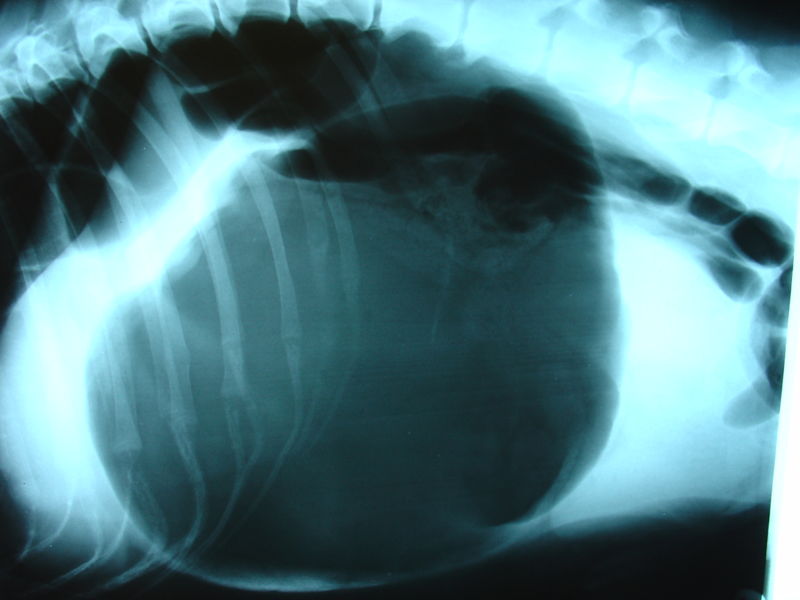


Photo of an x-ray showing gastric dilatation and volvulus in a German Shepherd Dog. The large dark area is the gas trapped in the stomach.


Large breed dogs, especially those that are deep chested, are more susceptible to bloat. According to Wikipedia.org, the five breeds at greatest risk are Great Danes, Weimaraners, St. Bernards, Gordon Setters, and Irish Setters.  In fact, the lifetime risk for a Great Dane to develop bloat has been estimated to be close to 37 percent. Standard Poodles are also at risk for this health problem, as are Doberman Pinschers and Rottweilers. Basset Hounds have the greatest risk for dogs less than 23 kg/50 lbs.


Some of the more common causes of bloat are rapid eating, eating dry foods that contain fat among the first four ingredients, foods such as kibble that expand in the stomach, drinking too much water before and after eating, drinking too much water too quickly, excessive exercise immediately after eating/drinking, stress and heredity.


Prevention of bloat can be difficult, especially for the dog who has had a relative experience bloat, and avoiding the causes listed above can certainly help.  However, there is a misconception out there that elevated dog dishes will help prevent bloat.  The thought being an elevated feeder will align the head allowing for a balanced eating position and better digestion.  Actually, studies are now showing that the opposite may be true…that elevated feeders may actually be a cause of bloat.


Typical elevated dog dish


An elevated feeder can cause a dog to inhale more air and allow the dog to eat its food at a faster than normal rate.  Both of which are causes of bloat.


The Glickman et al study, done on large and giant breed dogs, found that use of a raised feeder actually increases the risk of bloat by 110%. Dr. Glickman’s data showed that “approximately 20% and 50% of cases of GDV among the large and giant breed dogs, respectively, were attributed to having a raised food bowl.” (J Am Vet Med Assoc 2000;217:1492-1499).


While there are many benefits to using an elevated dog dish to feed your dog, new studies are showing that the prevention of bloat may not be one of them and in fact, they could actually lead to bloat.  Careful research should be done before an owner decides to purchase an elevated feeder for a dog that may be susceptible to bloat. 


References: 


Wikipedia: http://en.wikipedia.org/wiki/Bloat 


Peteducation.com: Bloat (Gastric Dilatation and Volvulus) in Dogs


Vet Info:  How an Elevated Dog Feeder Could Lead to Bloat


Globalspan.net: Bloat in Dogs


Published in:

on October 12, 2010 at 9:00 pm  Comments (3)  
Tags: , , , ,


2013年9月18日星期三

Canine Bloat - Gastric Dilatation-Volvulus (GDV)


What is Canine Bloat?


Bloat refers to the bloating of the stomach. Essentially it is a build up of gas in the stomach which is unable to be released. Bloat with Gastric Dilatation-Volvulus (GDV) occurs when the stomach fills with gas and twists 180 to 360 degrees on its axis between the esophagus and duodenum or the entrance and exit parts of the stomach. Bloat is a very serious problem in large breed dogs. When combined with the complications of GDV, bloat is a leading cause of death of dogs, second only to cancer.


The exact cause of bloat is still unknown. Generally, it is believed that excessive eating and drinking of water followed by exercise can cause bloat. It is thought that exercise causes food or fluid in the stomach to cause a build up of gas. The severity of the conditions is more serious when the stomach twists upon itself within the abdomen in a clockwise rotation causing the inlet and outlet of the stomach as well as blood vessels which supply the stomach to become constricted at both ends. As a result, the constriction will cause the stomach tissue to die. In a very short time, the stomach becomes restricted of nutrients and oxygen. If not treated, the dog can die.


What Are the Symptoms of Canine Bloat?


- Anxious, restless
– Distended abdomen
– Attempting to vomit
– Excessive drooling
– Whining
– Pale gums
– Increase in heart rate
– Difficulty breathing


What Causes Bloat?


The stomach becomes filled with gas and because of several possible factors, the dog is unable to relieve the pressure. Bloat, with GDV, is when the stomach goes into a twist. This closes both the esophagus and pylorus, preventing the dog from relieving the gas pressure which can quickly build up after a large meal. This condition is extremely fatal, causing shock, coma and eventually death. Like many other conditions which affect our dogs, the actual cause of bloat is still unknown. Several factor seem to contribute to a dog’s chances of getting bloat:


- Stress
– Eating or drinking too fast
– Exercise before and immediately after eating
– Having a large deep chest
– Elevated food bowls
– Hereditary
– Disposition


Are All Dogs At Risk of Canine Bloat?


Canine bloat and GDV usually only effects large breed dogs, but smaller dogs are still susceptible. It is thought that some lines of breeds are genetically at a higher risk. Though bloat can occur in puppies, it is a condition which usually occurs in adult dogs. Furthermore, male dogs are more likely to suffer from bloat than female dogs. Here is a list of some breeds that have a higher chance of being effected by bloat and GDV.


- German Shepherd
– Great Dane
– Standard Poodle
– Rottweiler
– Akita
– Bloodhound
– Great Pyrenees
– Irish Setter
– Old English Sheepdog
– Boxer
– Golden Retriever
– Irish Wolfhound
– St. Bernard
– Labrador Retriever
– Newfoundland
– Doberman


What is the Treatment of Dog Bloat?


Canine bloat is a very serious problem. If you suspect your dog of having bloat, contact your vet immediately. Every second counts! If caught and diagnosed quick enough, initial treatment will involve inserting a tube or tochar into the stomach wall to remove the gas. If necessary, the vet will then operate, attempting to untwist the stomach. Secondary treatment will involve treating shock, dehydration, fatigue, and other complications resulting from the distension of the stomach.


Is There Any Way To Prevent Dog Bloat?


Prevention of bloat can be difficult. Because there are so many possible causes for this condition, prevention must be examined on an individual basis. If you have a dog that is at risk there are a couple of things that you can do to decrease the chances of this fatal condition. Since bloat is believed to be connected with genetics and hereditary, these preventive measures can only decrease the chances of bloat.


- Do not overfeed. Feed 2-3 small meals a day.
– Do not use elevated food bowls.
– Do not allow your dog to drink large amounts of water after eating.
– Add an enzyme product to your dogs food.
– Keep emergency veterinary contact information handy.
– Gastropexy surgery.


This article only provides BASIC information about canine bloat. Consulting your veterinarian is always your best source of health information.